- Browse All
- Hood & Front End
-
Cab & Sleeper
- Cab Assembly
- Sleeper Assembly
-
Cab Exterior
- A Pillar Panel
- Accessory, Work Light
- Air Cleaner
- Air Conditioner Evaporator
- Air Conditioner Hose
- Air Conditioner Misc Parts
- Air Conditioner Receiver / Dryer
- Air Conditioner Seals & Orings
- Antenna
- Back Glass
- Body, Misc. Parts
- Bracket, Chassis Fairing
- Brackets, Misc
- Cab Jack
- Cab, Misc. Parts
- See More...
- Cab Interior
- Door
- Dash
- Sleeper Exterior
- Sleeper Interior
- Glass
- Browse All
- Engine
- Drivetrain
-
Axle & Wheel End
- Front Differential
- Rear Differential
- Non-Driven
- Drive
-
Differential Components
- Axle Shaft
- Carrier and Cap (Front)
- Carrier and Cap (Rear)
- Diff & Pd Clutch Collar
- Diff & Pd Shift Fork
- Diff (Inter-Axle) Component
- Diff (Main) Parts & Assembly
- Diff Adjuster
- Diff Clutch Plate
- Diff Planetary Gear
- Diff Sun Gear
- Differential Bearing Kit
- Differential Case
- Differential Seal
- Differential Side Gear
- See More...
- Air System
- ABS & Electronics
- Hub & Brakes
- Wheel & Tire
- Cut Off
- Browse All
- Chassis
- Steering & Suspension
- Exhaust & Aftertreatment
- Truck Equipment
- Trailer
- Accessories
- Axle
- Cab
- Body
- Cooling
- Electrical
-
Engine & Drive
- Starter
- Oil Cooler
- Air Cleaner
- Fan Blade
- Exhaust
- Filter / Water Seperator
-
Transmission
- Equip Trans Clutch/Converter Housing
- Equip Transmission Brake
- Equip Transmission Case
- Equip Transmission Clutch Assy
- Equip Transmission Control Module
- Equip Transmission Cooler
- Equip Transmission Fork
- Equip Transmission Gear
- Equip Transmission Input Shaft
- Equip Transmission Misc Parts
- Equip Transmission Seal
- Equip Transmission Sensor
- Equip Transmission Shifter, Electronic
- Equip Transmission Shifter, Manual
- Equip Transmission Support Bracket
- See More...
- Torque Converter
- Transfer Case
- Drive Shaft
- Radiator Overflow Bottle
- Engine Assembly
- Browse All
- Other
- Hydraulics
- Steering
- Wheel & Brakes
- Attachments
- Track
Dump Body Types Explained
Shapes, Steel vs. Aluminum, and How to Size One Right
Quick answer: Choosing a dump body comes down to four decisions: the floor/side shape (elliptical bodies shed material better, rectangular bodies hold more volume for their size), the material (steel vs. aluminum — and the weight difference isn't always what you'd expect), the steel grade and gauge if you're going with steel, and getting the cab-to-trunnion measurement right so the hoist and body geometry actually fit your chassis.
Common Dump Body Shapes and Styles
Not all dump bodies are built the same way, and the shape has a real effect on how material flows out and how much the body can hold.
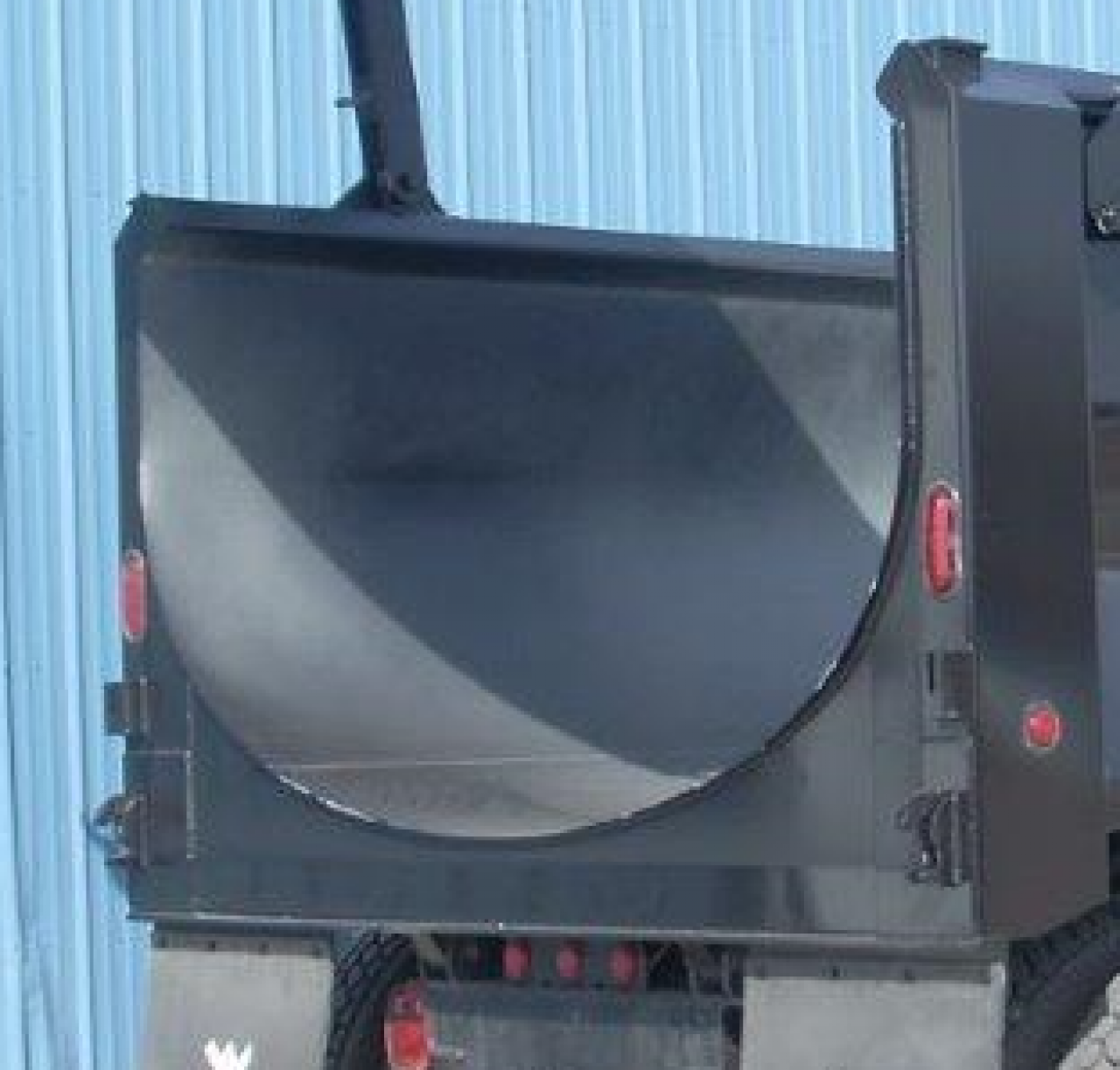
A full elliptical body (like the Henderson Magnum) has a continuously curved floor and sides, shaped like a smooth bowl. That curve helps material — especially sticky or wet loads — slide out cleanly instead of hanging up in corners, which is why elliptical shapes are popular for asphalt and aggregate hauling.
Semi-Elliptical
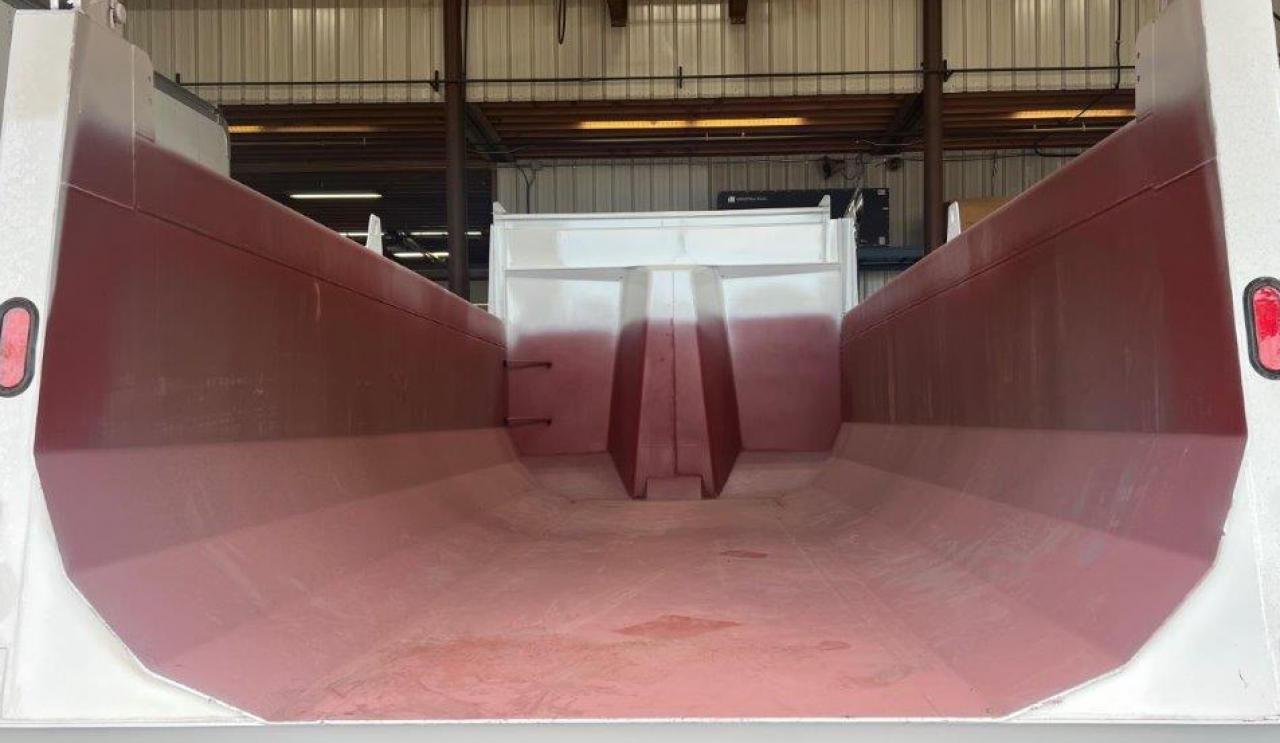
A semi-elliptical body (like the Bibeau EL-Series) curves at the upper sides but flattens out toward the floor. It's a middle ground — better material flow than a straight rectangular body, with more usable floor space than a full elliptical shape.
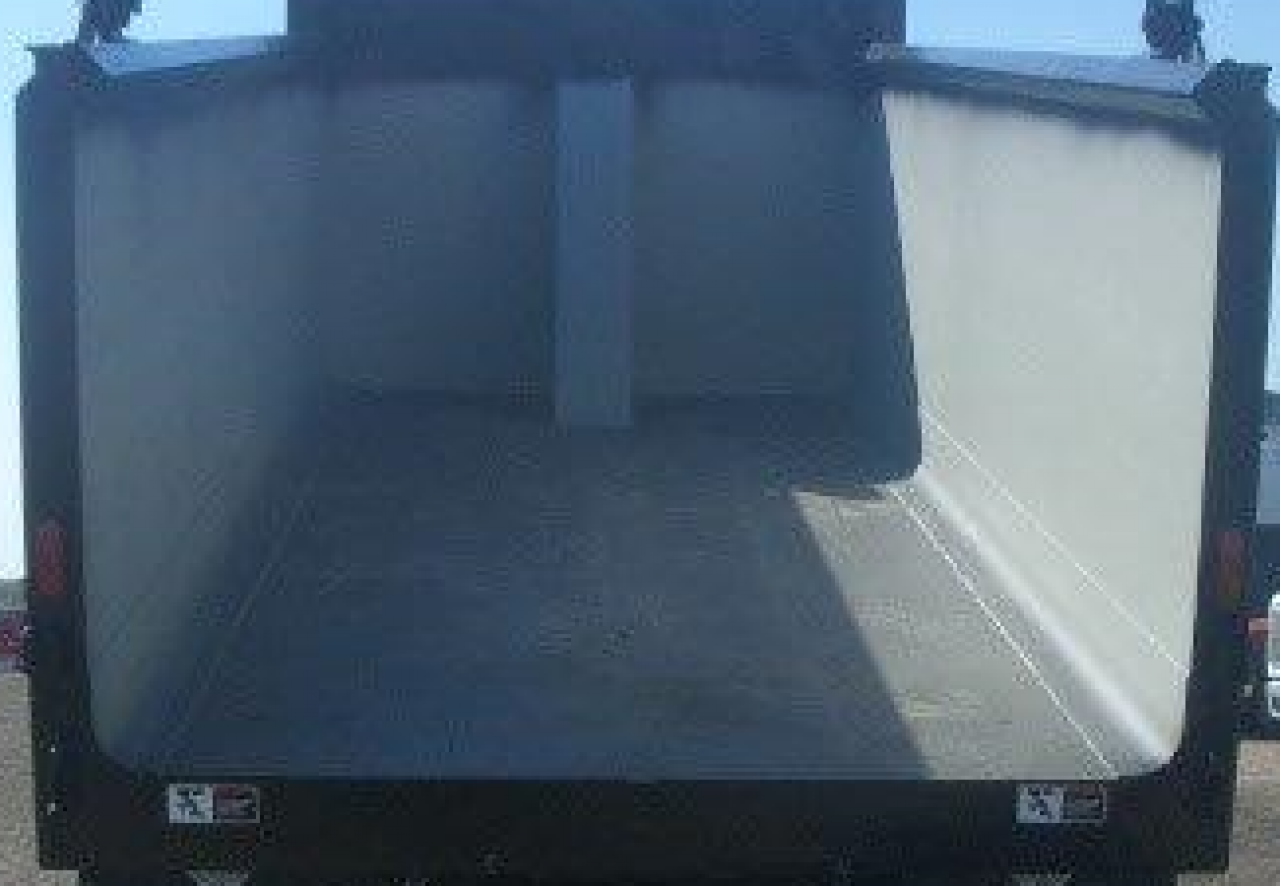
Rectangular bodies (like the Henderson Mark "E" and Bibeau BFL-S) have flat floors and vertical sides. They give you the most usable volume for a given exterior length and width, at the cost of somewhat worse material flow compared to a curved floor — sticky loads are more likely to need a assist getting out.
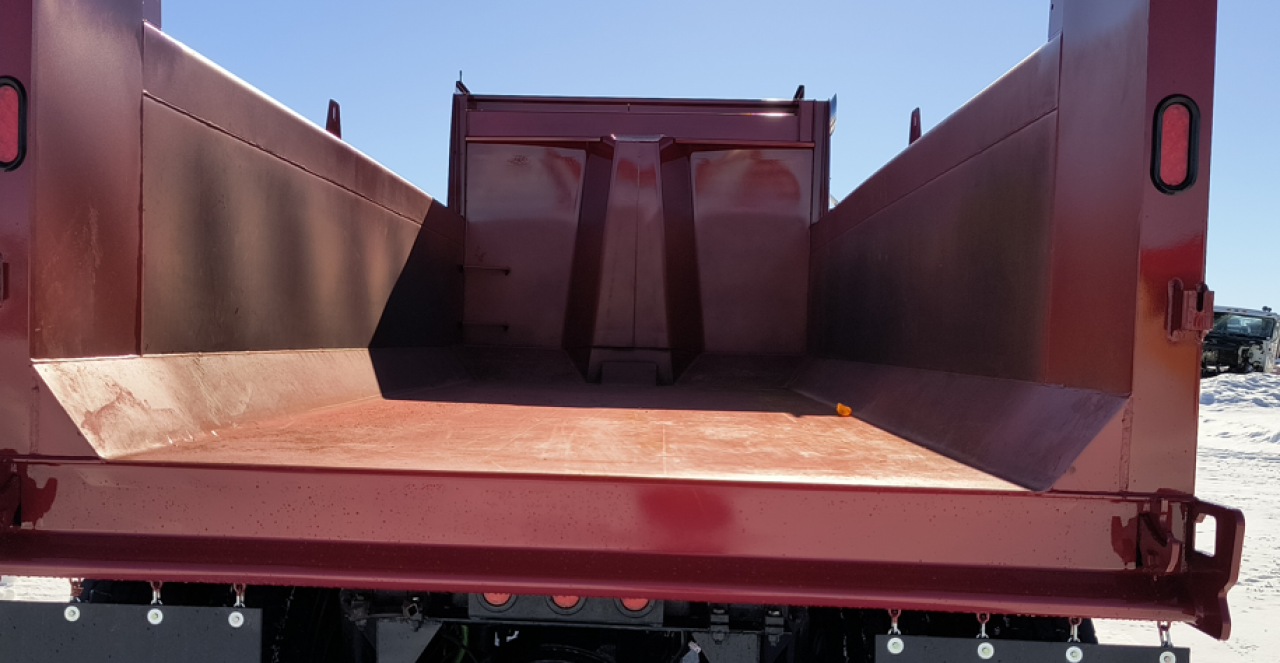
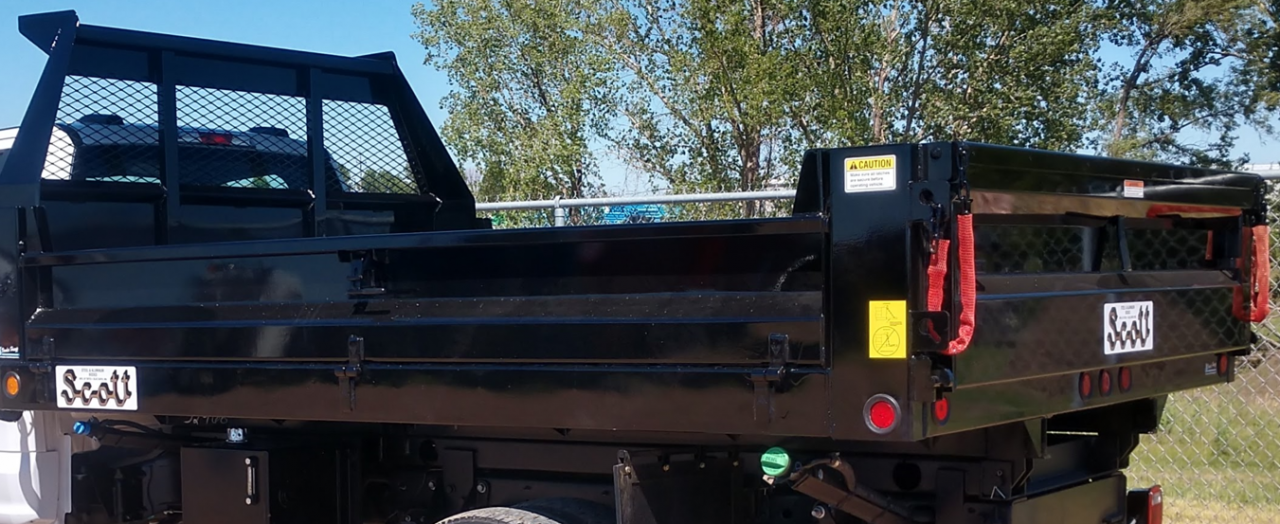
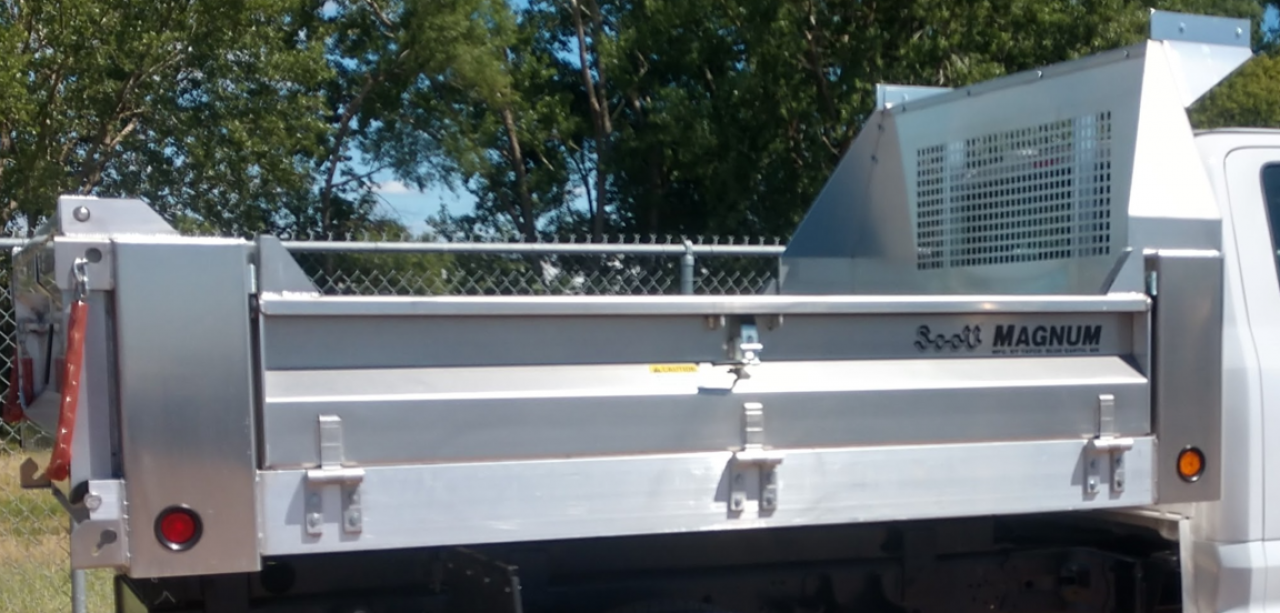
Contractor-style bodies are built around flexibility rather than maximizing one shape — they're set up to haul mixed loads (aggregate, equipment, pallets, tools) rather than one material all day. Steel and aluminum versions (like the Scott Steel Contractor and Scott Magnum Aluminum Contractor) are both common.
Fold-Down Side Contractor Bodies
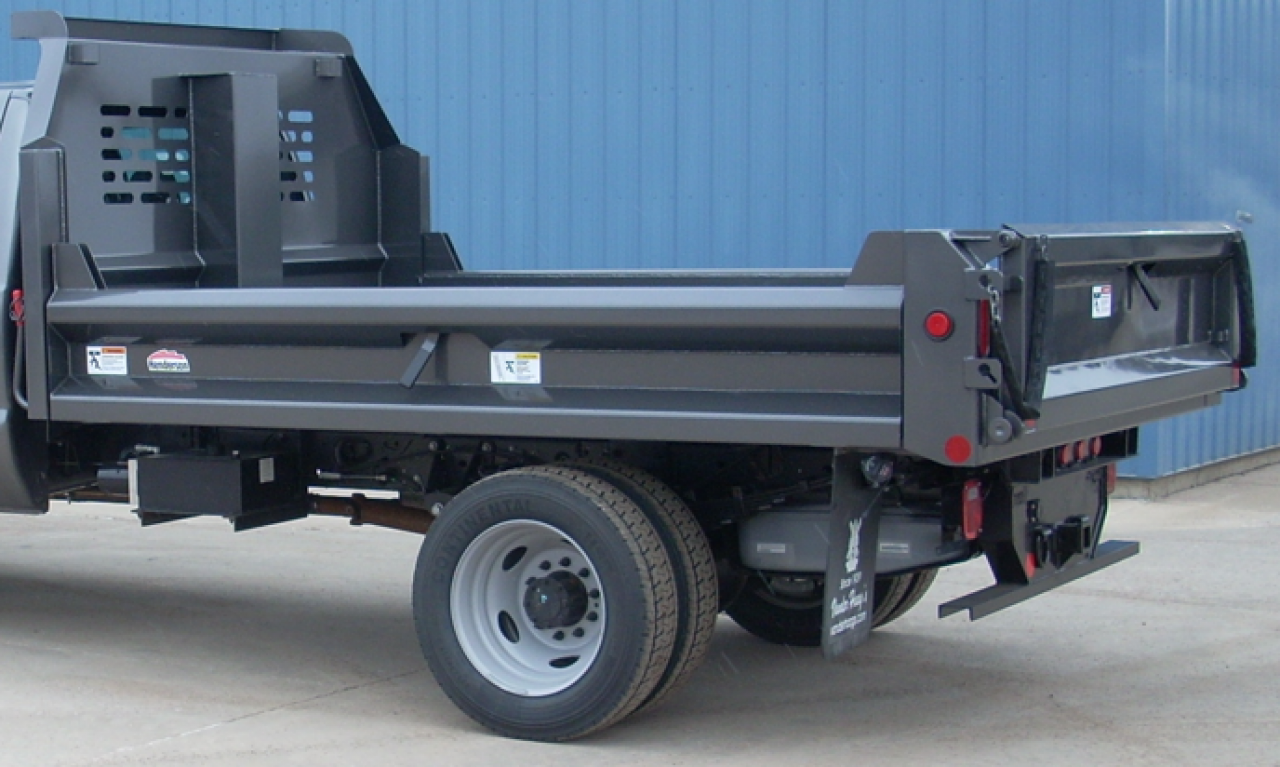
Some contractor bodies (like the Henderson Mark 3 and Mark 4) add fold-down sides, which make it much easier to load and unload equipment, pallets, or oversized material from the side rather than only over the tailgate or top rail.
Lighter-Duty Aluminum Options
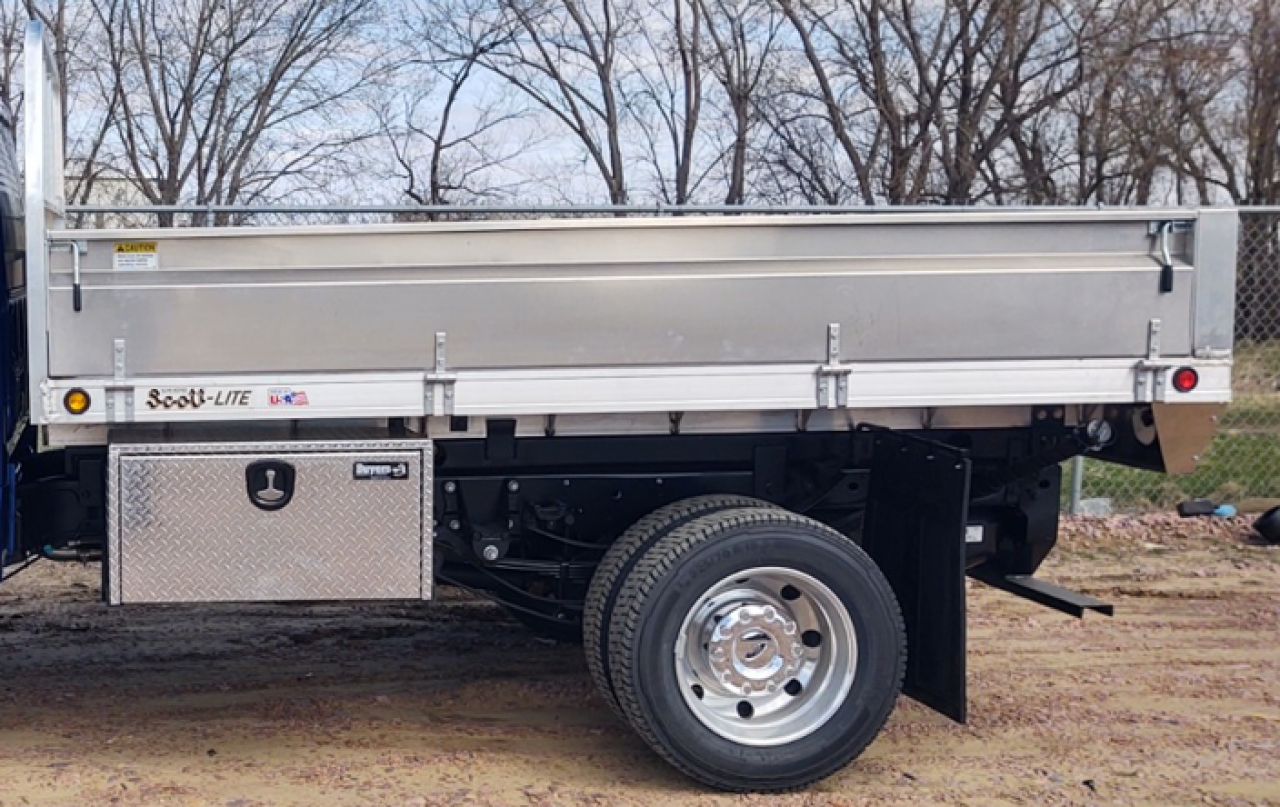
For applications where minimizing weight matters more than maximum durability, a lighter-gauge aluminum body (like the Scott Lite Aluminum Contractor) trades some toughness for extra payload capacity.
Single Axle Configurations
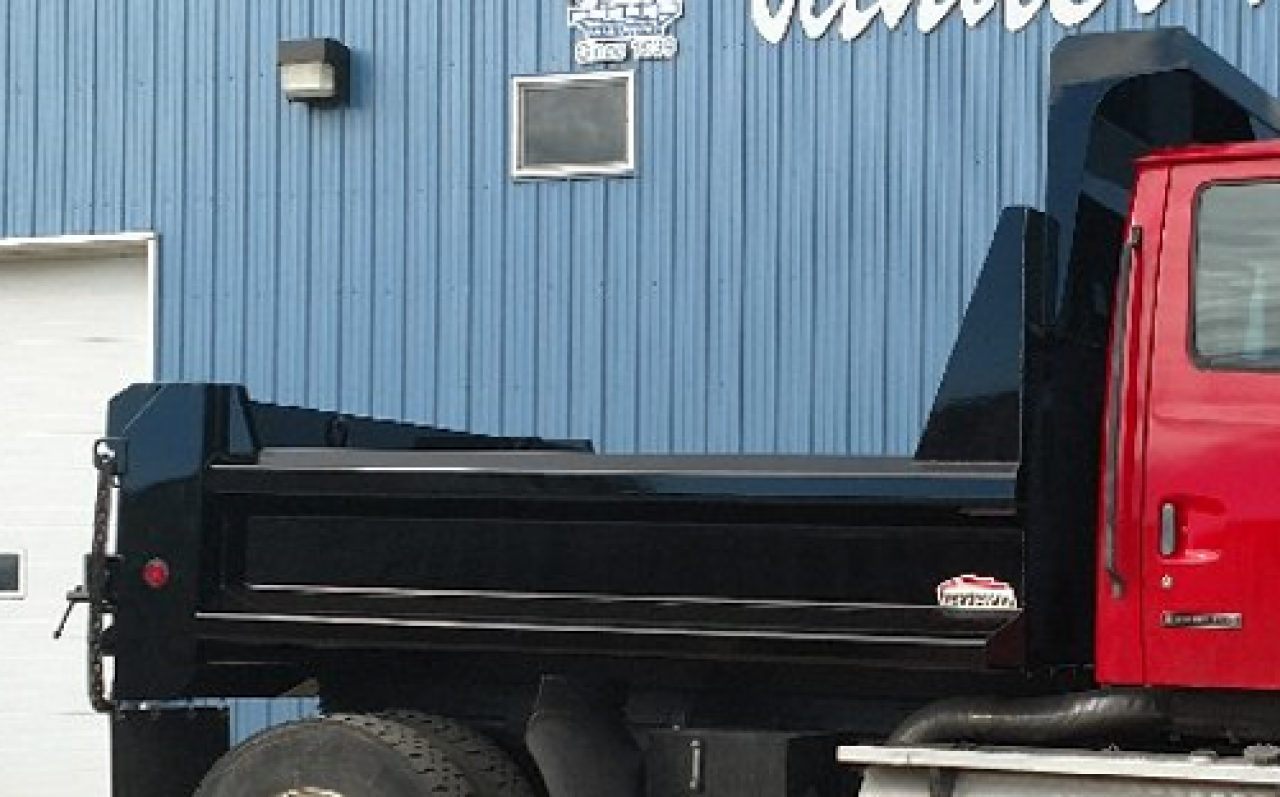
The same body styles are also available in single-axle configurations for trucks that don't need (or aren't rated for) a tandem-axle setup.
Steel vs. Aluminum: Which Is Actually Lighter?
The old rule of thumb in the industry has always been "aluminum is half the weight, twice the price." That's worth double-checking rather than assuming, because it doesn't hold up as cleanly as it used to — especially once you account for the abrasion-resistant liner that most aluminum bodies need to hold up to abrasive material the way bare steel does.
Here's a side-by-side comparison of an aluminum body (Rogers AB Series) with a 1/2" abrasion-resistant liner added, against a comparable steel body (Bibeau BFL-S Series):
| Body Length | Aluminum Body Weight | + 1/2" AR Liner | Total Aluminum Weight | Steel Body Weight | Steel's Weight Advantage | % Lighter |
|---|---|---|---|---|---|---|
| 16' | 3,645 lbs | 400 lbs | 4,045 lbs | 4,211 lbs | 166 lbs | 3.9% |
| 17' | 3,774 lbs | 425 lbs | 4,199 lbs | 4,375 lbs | 176 lbs | 4.0% |
| 18' | 3,875 lbs | 450 lbs | 4,325 lbs | 4,539 lbs | 214 lbs | 4.7% |
| 19' | 3,975 lbs | 475 lbs | 4,450 lbs | 4,704 lbs | 254 lbs | 5.4% |
| 20' | 4,095 lbs | 500 lbs | 4,595 lbs | 4,889 lbs | 294 lbs | 6.0% |
| 21' | 4,205 lbs | 525 lbs | 4,730 lbs | 5,053 lbs | 323 lbs | 6.4% |
The takeaway: once you add a liner to the aluminum body to match steel's abrasion resistance, the difference in weight can be pretty minimal. That doesn't mean aluminum is a bad choice; aluminum still resists corrosion better and can be the right call depending on the application. But "aluminum is significantly lighter" isn't a safe assumption to spec around anymore — it's worth running the numbers for your specific body length and configuration.
Steel Strength and Abrasion Resistance
If you're going with a steel body, the steel grade matters as much as the shape. Abrasion-resistant (AR) steel is a high-carbon alloy engineered to resist wear, and it comes in several grades:
| Grade | Tensile Strength | Yield Strength | Brinell Hardness (BHN) |
|---|---|---|---|
| A569 (mild steel) | 50,000 | 36,000 | N/A |
| A570 (Grade 50) | 65,000 | 50,000 | 131 |
| AR235 | 90,000 | 70,000 | 235 |
| AR400 | 180,000 | 145,000 | 400 |
| AR450 | 214,000 | 181,000 | 450 |
| AR500 | 225,000 | 200,000 | 500 |
Tensile strength is the maximum stress the steel can handle before it stretches or breaks. Yield strength is the point where it starts to permanently deform. Brinell hardness measures resistance to wear by pressing a hardened ball into the material and measuring the indentation — the higher the number, the more abrasion the steel can take before it wears through.
Higher grades (AR400 and up) hold up to abrasive loads like rock, sand, and demolition debris far longer than mild steel, which is why they're common in bodies built for heavy aggregate or scrap hauling. The trade-off is usually cost and, at the highest grades, some reduction in how easily the steel can be formed or welded.
Steel Thickness (Gauge) Reference
Steel thickness is often specified by gauge rather than a decimal measurement, which can be confusing if you're comparing specs from different builders:
| Gauge | Decimal Thickness | Weight (lbs/sq ft) |
|---|---|---|
| 18 | 0.0478" | 2.000 |
| 16 | 0.0598" | 2.500 |
| 14 | 0.0747" | 3.125 |
| 12 | 0.1046" | 4.375 |
| 11 | 0.1196" | 5.000 |
| 10 | 0.1345" | 5.625 |
| 8 | 0.1644" | 6.857 |
| 7 | 0.1793" | 7.500 |
| 3/16" | 0.1870" | 7.660 |
| 1/4" | 0.2500" | 10.210 |
| 3/8" | 0.3750" | 15.320 |
Sizing a Dump Body: Cab-to-Trunnion Measurement
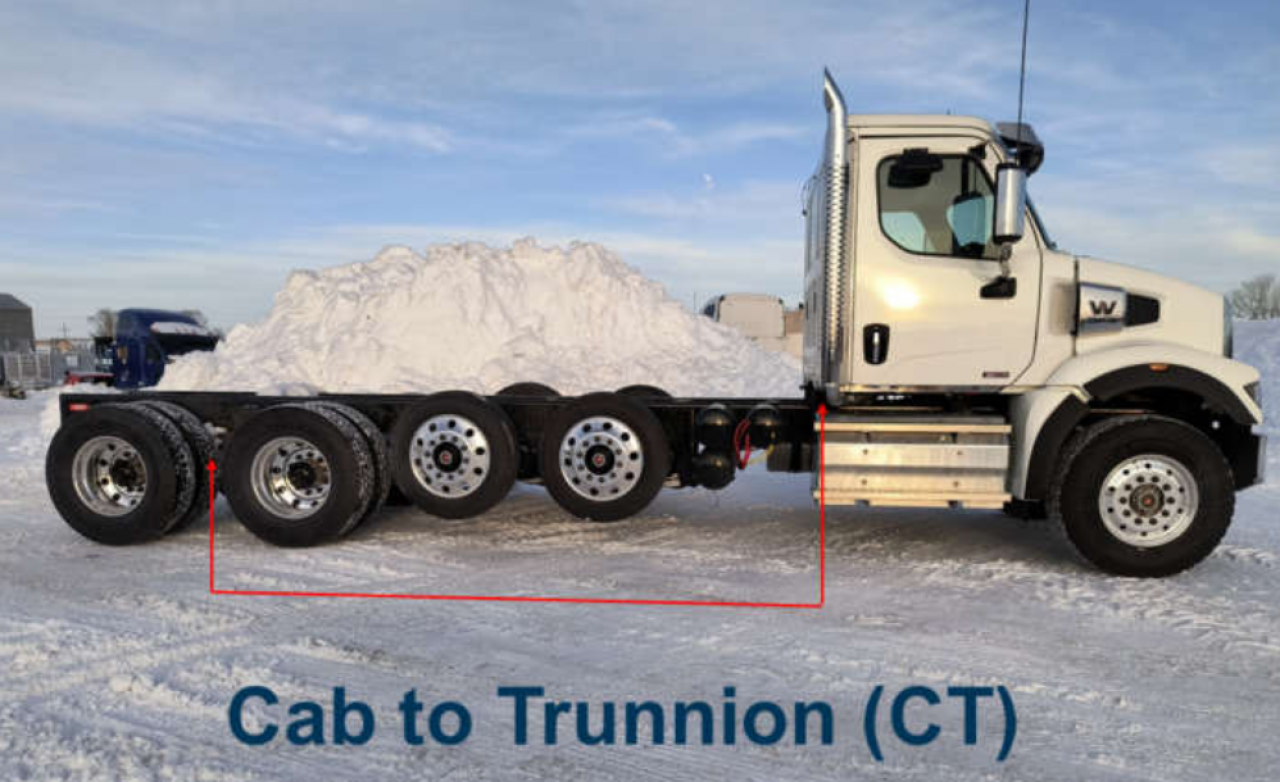
Cab-to-trunnion (CT) is the distance from the back of the cab to the midpoint between the tandem axles — the pivot point the hoist geometry is built around. Getting this measurement right matters because it determines whether the body, hoist, and frame actually work together correctly once installed. Clear (or effective) CT is measured from the rear surface of anything mounted behind the cab — toolboxes, headache racks, air tanks — to the center of the trunnion, not just from the back of the cab itself.
Note: if the hoist cylinder is mounted at the front of the body with no doghouse, add 12" to the cab-to-trunnion measurement.
Rule-of-thumb CT by body length:
| Body Length | Straight Tailgate CT | Asphalt Tailgate CT |
|---|---|---|
| 13' | 108" | 96" |
| 14' | 120" | 108" |
| 15' | 132" | 120" |
| 16' | 144" | 132" |
| 17' | 156" | 144" |
| 18' | 168" | 156" |
| 19' | 180" | 168" |
| 20' | 192" | 180" |
These are starting points for planning purposes — final CT should always be confirmed against your specific chassis and hoist before ordering a body.
Tips From Our Team
Over the years, we've found the dump body decisions that go wrong are almost always about matching the body to the actual job, not about picking the "best" body in the abstract. A few things we recommend:
-
- Don't assume aluminum is automatically going to be significantly lighter— run the numbers for the specific body length and liner combination you're comparing to see how much weight is actually saved.
- Match the shape to what you're hauling most often, not what you'll haul occasionally. An elliptical body earns its keep on sticky material; a rectangular body earns its keep on volume.
- If you're hauling abrasive material regularly, don't underspec the steel grade to save money up front — a body that wears through early costs more in the long run than the upgrade would have.
- Confirm your cab-to-trunnion measurement against your actual chassis, including anything mounted behind the cab, before ordering — this is one of the most common (and expensive) mistakes to catch after the fact.
Dump Bodies and Truck Equipment at Vander Haag's
Specing a dump body means balancing shape, material, steel grade, and fit all at once — and getting any one of them wrong is expensive to fix after the fact. Our team works through these decisions with contractors and fleets regularly and can help match the right body to your application and chassis, not just sell you whatever's in stock. Reach out to your local Vander Haag's location to talk through options for your specific truck and use case.
Frequently Asked Questions
What's the difference between a full elliptical and a rectangular dump body? A full elliptical body has a continuously curved floor and sides that help material slide out cleanly, which is common for asphalt and aggregate hauling. A rectangular body has a flat floor and vertical sides, offering more usable volume for its exterior size at some cost to material flow.
Is aluminum or steel better for a dump body? It depends on the application. Aluminum resists corrosion better and, depending on the specific comparison, can carry some weight savings. Steel with the right AR grade tends to hold up better to abrasive material over time. The right choice depends on what you're hauling and how you weigh corrosion resistance against abrasion resistance.
What does AR400 steel mean? AR400 refers to abrasion-resistant steel with a Brinell hardness rating around 400 — a measure of how well it resists wear from abrasive material. Higher AR numbers (AR450, AR500) indicate even greater hardness and wear resistance, typically at a higher cost.
What is cab-to-trunnion (CT) measurement and why does it matter? Cab-to-trunnion is the distance from the back of the truck's cab to the midpoint between the tandem axles, which is the pivot point the dump body's hoist geometry is designed around. Getting this measurement wrong can mean the body and hoist don't work together properly once installed, so it should always be confirmed against the actual chassis before ordering.
What is a contractor dump body used for? A contractor dump body is built for hauling mixed loads — aggregate, equipment, pallets, and tools — rather than being optimized for one material. Many contractor bodies add features like fold-down sides to make loading and unloading easier from angles other than the tailgate.